Parker Flores · 20 November 2026
Unlocking Efficiency Gains Through Tailored Enclosure Designs in Aerospace Component Logistics
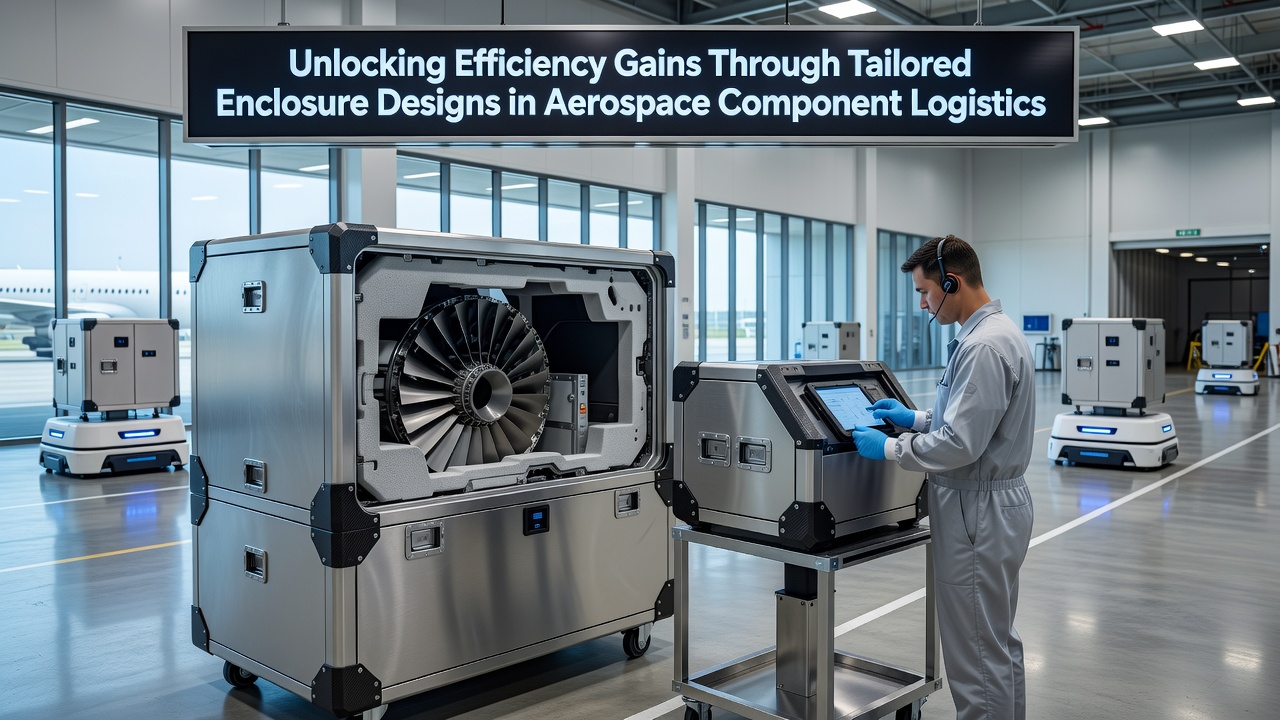
Aerospace component logistics demands precise protection during transport and storage because even minor damage leads to costly delays and safety risks, and tailored enclosure designs address these needs by matching specific part dimensions, material sensitivities, and handling requirements. Manufacturers and logistics providers have increasingly adopted these custom solutions since they reduce waste while improving throughput in supply chains that span multiple continents.
Core Principles Behind Tailored Enclosure Systems
Engineers begin by analyzing the physical properties of each component, including weight distribution, vibration sensitivity, and exposure limits to temperature or moisture, which allows them to specify enclosure dimensions, internal bracing, and sealing mechanisms that fit without excess space or pressure points. Data from transport simulations shows that such precision cuts shock transmission by measurable percentages compared with generic containers, and this advantage compounds across high-volume shipments of turbine blades, avionics modules, or composite panels.
Material selection plays a central role because aluminum alloys, advanced composites, and specialized foams each offer distinct strength-to-weight ratios and corrosion resistance that suit different flight hardware. Observers note that when enclosures incorporate modular inserts or adjustable partitions, teams can reconfigure them for subsequent loads without fabricating entirely new units, which extends service life and lowers per-unit costs over repeated cycles.
Measured Efficiency Improvements in Practice
Logistics records from several aerospace programs reveal that tailored enclosures shorten packing times by eliminating trial-and-error adjustments, while also decreasing the volume of cushioning materials required per shipment. Reduced packaging mass directly translates into lower fuel consumption during air and ground transport, and carriers report measurable gains in payload capacity when every container occupies the smallest possible footprint yet still meets impact and environmental standards.
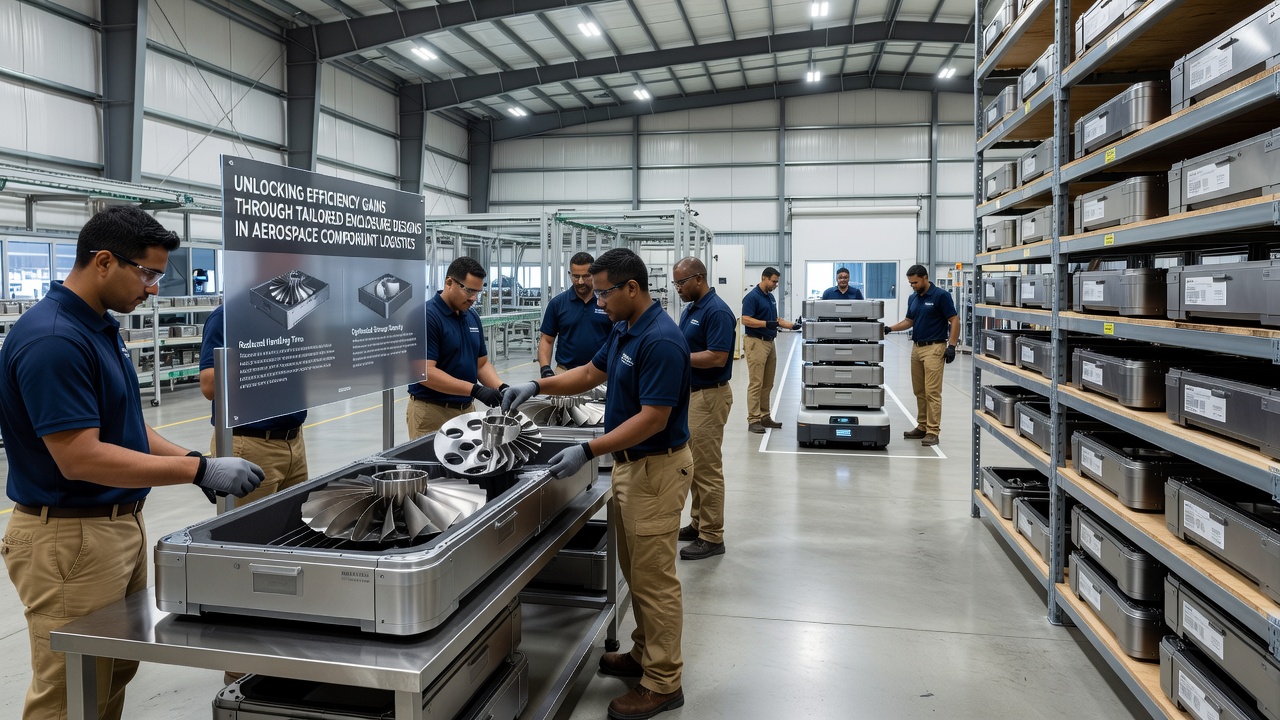
One aerospace supplier integrated sensor-equipped enclosures that monitor internal conditions throughout transit, and the resulting datasets helped refine future designs while providing traceability that regulatory bodies require. Figures from industry audits indicate fewer rejected shipments and reduced insurance claims once these monitoring features became standard, demonstrating how data loops back into design improvements that sustain long-term efficiency.
Integration With Regulatory and Environmental Standards
Compliance with aviation authority specifications remains non-negotiable, and enclosure manufacturers routinely align their products with guidelines issued by bodies such as the European Union Aviation Safety Agency and Transport Canada. These standards cover fire resistance, electromagnetic shielding, and structural integrity under extreme conditions, so designs that satisfy multiple jurisdictions simultaneously simplify global distribution networks.
November 2026 brought updated reporting requirements from several oversight organizations that emphasized lifecycle tracking of packaging materials, which prompted further innovation in reusable and recyclable enclosure components. Companies that had already invested in modular systems found themselves better positioned to meet the new documentation demands without major redesigns.
Supply Chain Coordination and Technology Adoption
Digital modeling tools now allow logistics planners to test enclosure prototypes virtually before physical production begins, shortening development lead times and minimizing material waste during iteration. When these models incorporate real-time shipment data from previous routes, predictions about stress points become more accurate and the resulting enclosures perform closer to theoretical optima.
Collaboration between component fabricators, enclosure specialists, and freight operators has produced standardized interfaces that speed loading and unloading at transfer points. Research coordinated through academic partnerships, including work referenced by MIT studies on aerospace supply chains, shows that such interoperability reduces dwell time at warehouses and airports, which compounds into meaningful schedule reliability across multi-leg journeys.
Conclusion
Tailored enclosure designs continue to reshape aerospace component logistics by aligning protection, efficiency, and compliance within single integrated systems. As data collection and modeling capabilities advance, the gap between generic containers and purpose-built solutions widens, delivering measurable reductions in damage rates, transit costs, and environmental impact while supporting the stringent quality expectations of the sector.