Tina Schröder · 6 November 2026
Adapting Enclosure Designs for Extreme Weather Conditions in Global Distribution Networks
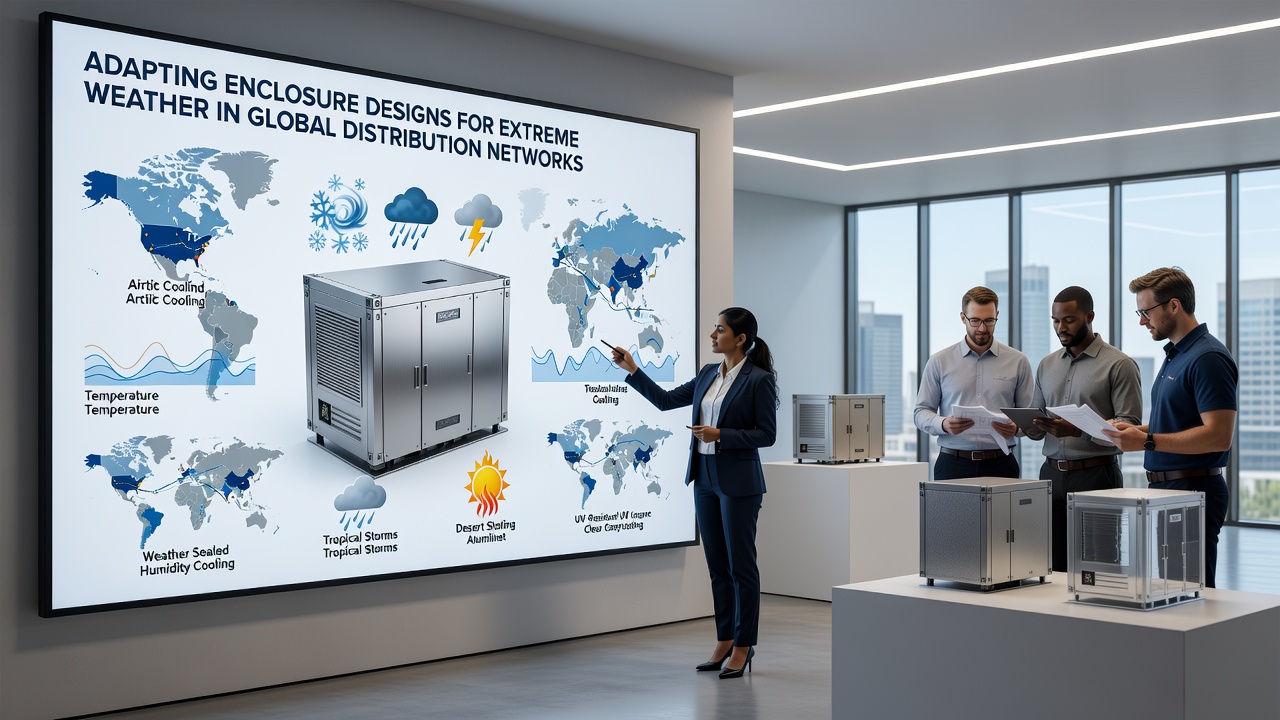
Global distribution networks face mounting pressure from extreme weather patterns that include prolonged heatwaves, intense storms, and rapid temperature swings across continents, and enclosure designs have evolved to address these variables through layered material systems and integrated monitoring tools. Research from the National Oceanic and Atmospheric Administration shows that weather-related disruptions in shipping corridors rose steadily between 2020 and 2025, prompting logistics operators to rethink how cargo containers and protective casings withstand environmental stress during transit.
Engineers have turned to advanced composites that combine aerogel insulation with phase-change materials, allowing enclosures to absorb and release heat at controlled rates while maintaining internal stability for sensitive goods such as electronics or pharmaceuticals. These systems appear in routes crossing the Arabian Desert and the Siberian rail network, where daily temperature fluctuations exceed 30 degrees Celsius, and field data collected by operators indicate reduced spoilage rates when such enclosures replace older metal or basic foam constructions.
Regional Challenges Drive Design Variations
Distribution hubs in Southeast Asia contend with monsoon flooding and high humidity that accelerates corrosion inside standard containers, so designers incorporate hydrophobic coatings and elevated base structures that channel water away from seals. Observers note that similar adaptations appear in Canadian prairie corridors, where enclosures must handle both summer hail and winter ice accumulation without compromising structural integrity during rail and truck transfers.
One study from the European Environment Agency highlights how enclosure ventilation systems equipped with automated dampers adjust airflow based on real-time sensor readings, preventing condensation in tropical ports while preserving cold-chain integrity in subzero conditions. These modifications integrate with existing tracking platforms, giving network managers visibility into enclosure performance across multiple climate zones without requiring separate hardware for each region.
Material and Structural Innovations
Manufacturers have adopted modular panel systems that allow quick replacement of damaged sections after storm events, reducing downtime in high-volume ports such as Rotterdam and Los Angeles. Carbon-fiber reinforced frames paired with UV-stabilized outer shells extend service life in areas exposed to intense solar radiation, and laboratory tests confirm these combinations maintain seal integrity after repeated cycles of expansion and contraction.
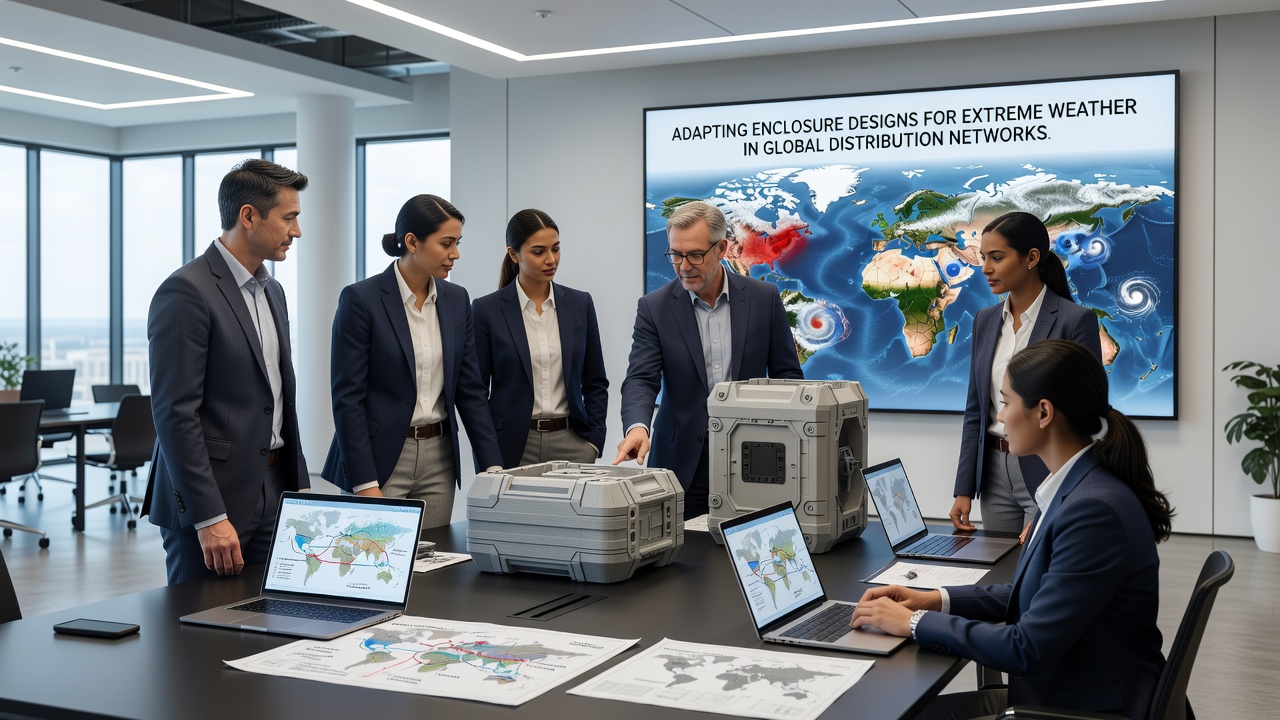
Smart enclosures now embed fiber-optic sensors that detect micro-fractures caused by wind-driven debris or thermal shock, transmitting alerts to central control centers before failures escalate. Data from these sensors, aggregated across fleets operating between Australia and North America, reveal patterns that inform iterative design updates issued quarterly by engineering teams.
Integration with Global Logistics Planning
Network planners coordinate enclosure specifications with seasonal forecasts released by meteorological agencies, adjusting container loads and routing decisions weeks in advance when models predict elevated risk periods. In November 2026, updated climate outlooks from the Australian Bureau of Meteorology prompted several carriers to reroute shipments around cyclone-prone zones and switch to reinforced enclosures equipped with additional tie-down points. Such coordination relies on standardized testing protocols developed through collaboration between academic institutions and industry groups, ensuring enclosures meet uniform performance benchmarks regardless of origin or destination.
Supply chain analysts track metrics such as internal humidity variance and impact resistance across thousands of shipments, feeding results into simulation software that predicts enclosure behavior under projected 2030 weather scenarios. These simulations guide procurement decisions, with operators favoring designs that demonstrate consistent performance in both arid and maritime environments.
Conclusion
Enclosure adaptations continue to evolve alongside shifting weather patterns and expanding distribution routes, supported by sensor data, material testing, and cross-regional coordination. Operators who implement these changes report measurable improvements in cargo integrity, while ongoing research from multiple agencies supplies the benchmarks needed to refine designs further. The focus remains on measurable performance under documented conditions rather than unverified assumptions about future climates.